Showing posts with label party dish. Show all posts

Thursday, April 19, 2018

Easiest Dessert Ever: Pineapple Delight

Pineapple Delight


A couple of friends of mine made this for their desi dinner parties. It was always a hit at their houses. I could never get an exact recipe from either friend, but here is what I came up with to replicate what I had tried before. This is a fire-free, egg-free icebox recipe. It's an easy crowd pleasure to put out to make your dinner party/daawat dessert selection more lavish. It is light on the palate and complements richer desserts. I've served this with heavy cream cheese coconut flan before and they went so well next to each other.


Ingredients:

8 oz heavy whipping cream
16 oz sour cream
1.5 cans sweetened condensed milk

1 can crushed pineapple in syrup
1 can pineapple chunks in syrup
*if you can find mango chunks, add some

Method: Strain pineapple in syrup and pineapple chunks. Set aside. In a large mixing bowl, mix, sour cream and sweetened condensed milk. Add in crushed pineapple and pineapple chunks. You can also add mango (like a cup of chunks) if it is in season. You can use frozen mango, but I find those to be a bit flavorless and fibrous. Keep aside sour cream-condensed milk pineapple mixture. Now whip your heavy whipping cream until it forms stiff peaks. Once this is done, gently fold in the pineapple mixture. Transfer into serving bowl. Refrigerate at least 4-5 hours or overnight. 

*I suppose you could add any fruit you want into this or make a fruit salad with a medley. I recommend using fruit that won't add color to the dairy ingredients, though.

Pineapple Delight served with flan de coco and fresh watermelon.


Friday, July 3, 2015

Fatima's Yakhni Pullao (Goat)

Fatima’s Yakhni Pullao

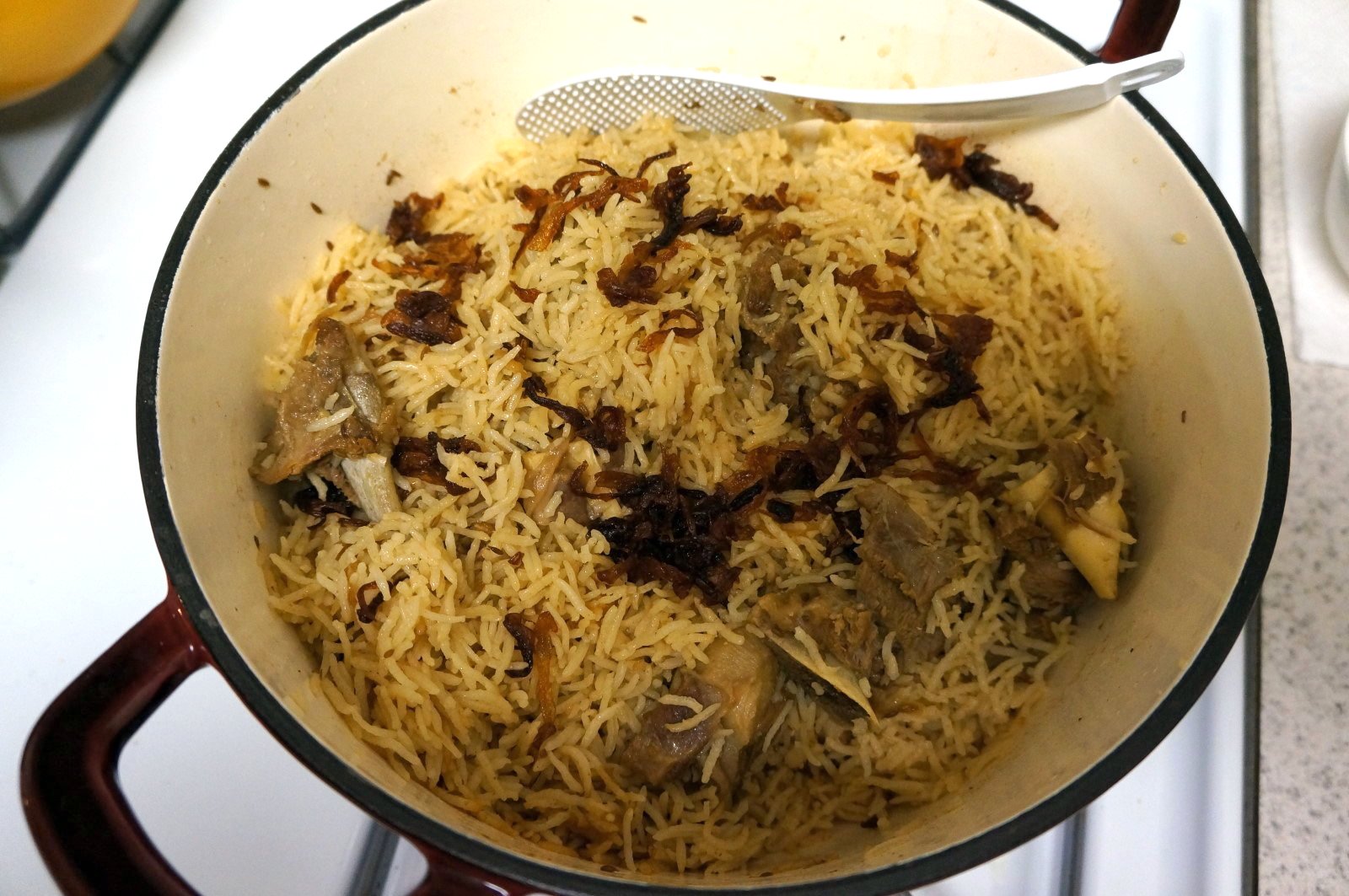
Yakhni pullao ready to serve for large gathering.


Yakhni means broth. This pullao is cooked in a golden, collagen rich, fatty goat broth. It is one of my husband's favorite dishes in my repertoire, and I like it a lot, too. It is not chile-hot at all. It's a great weekend dish for the family, but it's also a good fancy dish for a party because it shows "mehmaan nawaazi" that you are serving a lot of meat and high quality basmati rice. A deep stock is enriched by the addition of nalli, or bone marrow. 

*Take note that most of the pics I've added are from a day when I made this pullao for a daawat/party, but I'm giving a family sized recipe. That is why there are greater portions of ingredients than what I specify in the instructions. That day, I used a whole goat shoulder for my iftar party, 7 cups of rice, and 14 cups of yakhni.

The meat: Get about 2 pounds of goat meat, bone-in in medium botis (roughly 2-3 inch cube-ish size). Shoulder and chop pieces preferred. Ask butcher for about a pound of extra goat bones in a separate bag, especially nalli (marrow) bones, and trotters.  Desi halal butchers usually keep bags of this frozen. If you have a knowledgeable butcher, just ask for small to medium pullao cut pieces. If the pieces are too small, they will break apart when cooked.

On the left are the extra bones, on the right is a full shoulder with chops. I have washed this meat in my (spotlessly clean) kitchen sink.


For the yakhni (yields about 10 or so cups of stock)

Ingredients:

water to cover meat and bones in pot
1 onion peeled and cut in two halves
15 cloves garlic
about 5 inches of ginger chopped into large chunks (no need to peel, but wash well)
3 tbs whole garam masalas (I buy a bag of mixed whole garam masala, I think Deep brand)
make sure to get a couple of pieces of cassia bark, bay leaves, bari elaichi, and choti elaichi in the mix which will mainly be tiny pods of dhaniya, saunf, zeera, laung, and kali mirch. My mix also has star anise and mace (javitri).
2 whole dried red chiles
salt


Method:

Wash meat/bones well. Add to deep stock pot. Add water till the water just covers the meat. Too much water makes a weak stock.

Allow the water to come to a boil. Skim the scum that rises to the top a few times. When you have gotten most of the scum, add in all aromatics and sabit garam masala, and chile pods.

Scum to be skimmed off of the top of the broth before the seasonings are added.

Cover, lower heat to the lowest flame, and simmer for 1 hour and 15-30 mins till meat is very tender but not completely falling apart, and nalli looks loose from bones. My meat here in VA takes 1.5 hours to soften or “gallofy,” but in other places it only took 1 hour to 1.25 hours so use your best judgment on the timing. You don’t want the meat hard and spongy, you don’t want it shredding apart bc you still have to cook the rice and meat together.

About 5 mins before meat is done, add a large amount of salt to the stock. This will flavor the meat. You will still need more salt once the rice process begins.

Strain yakhni and keep the solids aside and allow them to cool. When cool, pick out all of the good meat pieces and keep aside. Now take a Japanese or Korean chopstick, which has a very thin pointy end (or similar thin pronged instrument, unused earwax cleaner, I dunno what else…linking pics so you get the idea of what to use) and use it to gently nudge the nalli out of the bones. Add nalli globules to stock. If you cook meat for a long time, the nalli will fall out on its own, but that would be too long a stage to cook the botis, so better to cook it till it is soft but still needs to be scooped or tapped out.

So you have your nalli floating in stock, and your good meat kept aside. Now throw away all of the spices and aromatics because they have done their job. You can keep a little of the tezpatta and cinnamon for looks if you like.


For the rice:
I use India Gate (Classic) brand rice. You should use your judgment for typical soaking and cooking time requirements of your preferred basmati rice brand. Don't use sella rice or any low grade of basmati. Three cups of raw rice to 6 cups stock will be needed. A 1:2  cup rice:stock ratio is used no matter the size of the pullao.

Ingredients:

3 cups basmati rice rinsed well and soaked for approximately 10 minutes (will be strained shortly before adding to the boiling stock)
6 cups stock
salt to taste (about 2.5 tsps or more…use more salt than you think you need)
1 tsp red chile powder
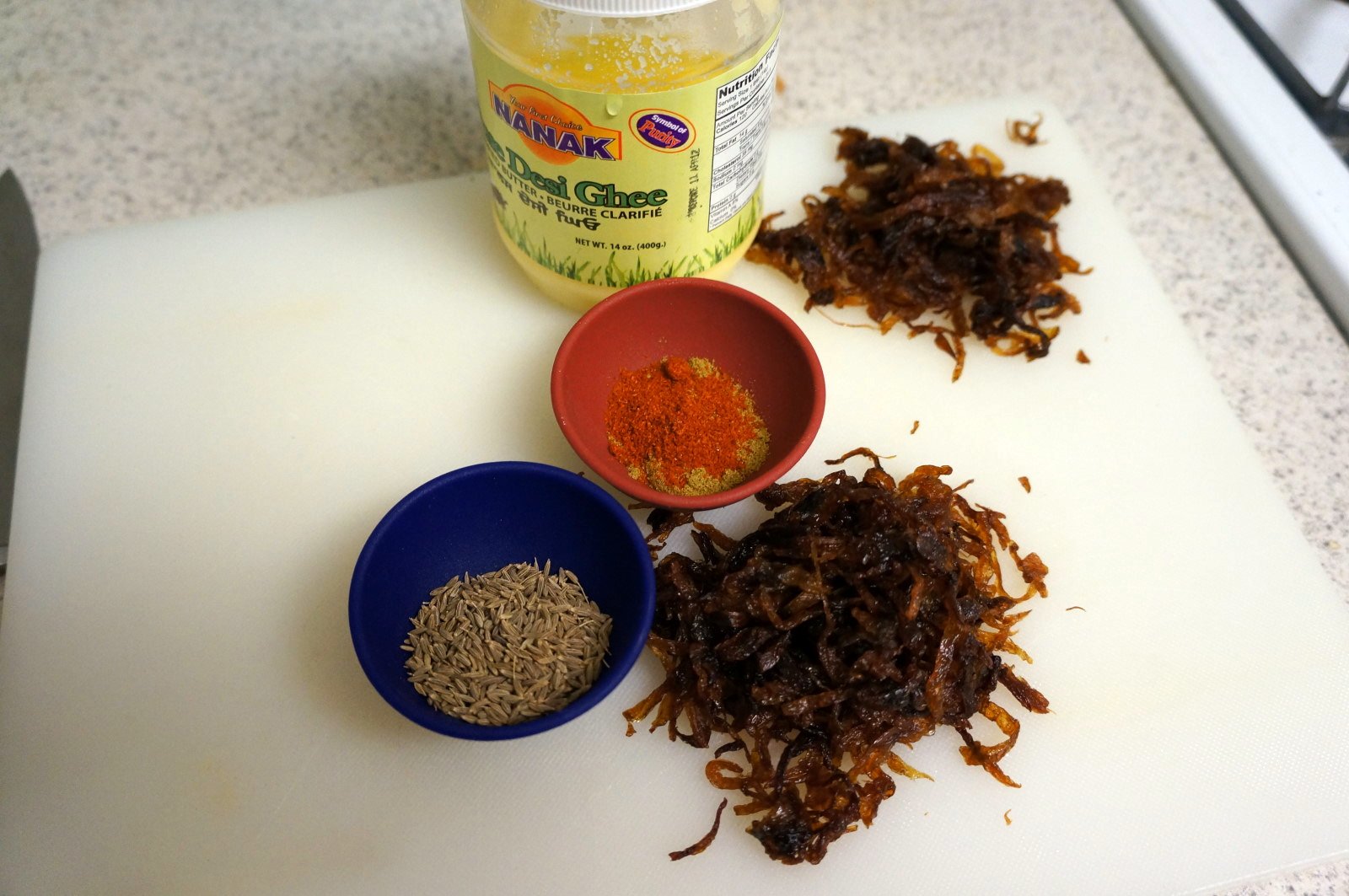
1 tsp zeera seeds whole
1 tsp ground zeera
¼ cup oil (same oil for frying finely sliced onions is ideal, I always keep it in a glass jar)
your boiled meat botis, cool and dry
1 tbs fresh lemon juice
1 tsp ghee or butter for basting the serving dish


Method: 

In a pot with a tight fitting lid: Add oil and zeera, when it sizzles, toss in meat and brown for a couple of minutes. Be gentle so it doesn’t break apart too much. The browning gives flavor but it is already cooked as much as it needs to be.

Toss in ½ o f the fried onions and allow to sizzle for a moment, these are red-brown fried so take care not to blacken them as they are already darkly fried.

Toss in ground spices, allow to sizzle. Before this burns, pour in all of the stock. Allow to come to a boil.

When stock is boiling, add in pre-soaked rice.

Allow stock to come to a boil again. Stir in lemon juice.

All should be bubbling and boiling along nicely. Now, cover and reduce flame to lowest point. Cook for 20 mins covered. After 20 mins, lift lid and allow some steam to escape and turn off flame. Re-cover and allow rice to rest for 10 mins. Resting the rice helps grains stay long and not break apart, as basmati is sensitive.


You will pour this into a large serving dish. I usually butter a deep serving dish like a lasagna pan or turkey broiler pan. Ghee also works well if you prefer that to butter. Before you start the transfer of vessels, put your remaining fried onions in the microwave for about 30 seconds to wake up the flavors. Pour pullao in layers adding a few sprinkles of the fried onion slivers between the layers, adding a final bit on the top layer for looks. Take care not to break the rice, be gentle.

Serve with plain yoghurt, lemon wedges, and if desired, a mild raita.

Left over yakhni can be frozen and used for a plain pullao or as the liquid in gravy. 


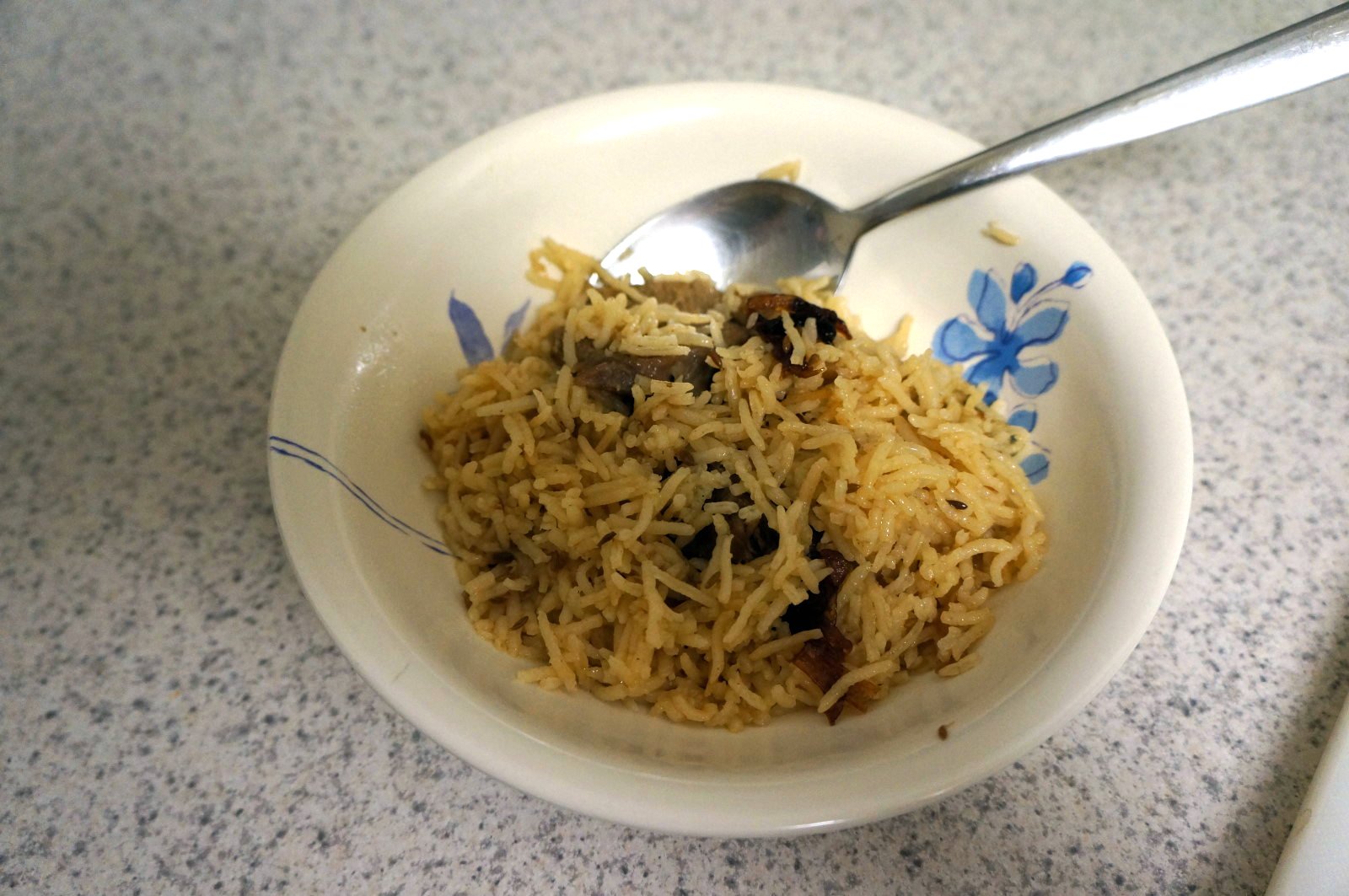
A smaller pullao made on a different day.

Rice grains lengthen like noodles and are very tender but separate. 


Thursday, September 4, 2014

Easy Jalfrezi


Jalfrezi is likely a Raj era invention from Bengal side that has morphed into a dish that appears in many interpretations.

For some, it is Indo-Chinese and requires stock powder, corn starch, and soy sauce. For others, it is a protein like paneer or chicken plus a medley of vegetables. Some like it fairly dry, and others like it in a wet tomatoey gravy. Some people use ketchup in their recipe, and in some restaurant style recipes it is creamy.

However it is made, the common factor in chicken jalfrezi seems to be that it must have bell peppers (aka capsicum) in it. Some people also like onions cut into petals in it. I am not a huge fan of lightly cooked onions, so I don't add those. Here is my very simple and easy version. For this you will need a curry powder type mix like Shan Curry Powder or a Kitchen King Masala. I use MDH Kitchen King Masala.

This recipe is as simple as a daily dish in method, but yields a bell pepper-chicken curry that is unique enough to serve at a party. The soy sauce adds an extra layer of flavor.

1 small organic chicken skinless and cut into karhai pieces (bone in)
1/4 cup oil
4 fresh green chiles, slit but intact
1 small onion diced
1 tsp garlic paste
1 tsp ginger paste
1/4 tsp turmeric
1/2 tsp red chile powder
1 tsp ground cumin powder
1 heaped tsp ground coriander powder
2 medium tomatoes roughly pureed
1 tsp MDH Kitchen King Masala
1 tsp salt or to taste
1/2 tsp soy sauce
one and a half cups bell pepper cut into petals (1/2 inch square pieces)...the number of peppers depends on how large they are. About 3 small or 1.5 of those giant ones.
1/4 cup chopped cilantro for garnish

Method: Heat oil in pan. Add in slit green chiles and allow them to fry for a few moments until they start to slightly soften. Remove with tongs or a slotted ladle. Keep aside to use as garnish at the end of cooking. Add the chopped onion to the oil. Cook this until it is turning golden, then add in the ginger and garlic. Cook this until the ginger and garlic also turn golden. Now add in the turmeric, red chile, cumin, and coriander powder. Allow this to sizzle for a moment, then stir in the tomato. Stir the tomato-masala a bit until most of the water has evaporated from it and the oil has risen to the top of it. Now add in the salt, soy sauce, and MDH Kitchen King Masala. Mix in the chicken and stir well until the chicken has completely changed color and is no longer raw looking. Now cover the pot, turn the flame to the lowest setting, and cook about 10-20 minutes until the chicken is just completely done. You shouldn't need to add water because they chicken will release water as it cooks. If needed, add very little water. When the chicken has just reached the point of being done, add in your bell pepper petals and turn up the heat. Stir for a moment, then lower the heat, cover, and cook for 5 more minutes. You want the bell peppers to cook through but retain a gentle amount of crunch and good color. Now stir in 3/4 of your fresh cilantro. Pour into a serving dish and garnish with remaining cilantro and with the four fried slit green chiles.

Serve with white basmati rice or even Chinese style stir fried rice.


Tuesday, October 15, 2013

Baingan ka raita (Cooling yoghurt with fried eggplant)


This is an excellent raita to serve at parties or on any day that you have made a pullao or biryani. It is fancy and takes some time to prepare, so it is not an everyday raita. (We have plain yoghurt with daily meals, anyhow.)

You will have to make this raita in three steps.

Step 1) Roast you masala: Here you will prepare a red chile powder-cumin masala. The quantity I give here is more than you will need for one raita recipe. I prepare small amounts of this masala to keep on hand for most of my raita recipes.

2 heaping tbs whole cumin seeds
2 tbs powdered cumin
1 tsp red chile powder.

Heat a flat frying pan. Add in the whole cumin seeds and stir frequently, allowing them to color, but taking care not to burn them. Pour them into a wide bowl and keep aside, allowing them to cool. Turn off the flame under the pan, but when you have just poured out the whole cumin seeds and the pan is still very hot, put in the cumin and chile powder. Stir these with a wooden spoon for a few moments, just allowing them to release their oil and fragrance and wake up their flavor. Put this in another bowl and keep aside until it is cool.

When the whole cumin seeds are completely cool, add them into your spice grinder (mine is a small coffee bean grinder) and coarsely crush the seeds by pulsing the button a few times. There should be large bits of seeds and some whole seeds in the powder.

Pour these powders into separate storage containers, and keep them for use in raitas.

Eggplant cubes before frying
Step 2) Frying your eggplant: Select two medium sized, young eggplants. The less seeds, the better. My farmer's market has great eggplant right now, so this is why I made this recipe today.

Chop eggplant into bite sized cubes. The size I do is about 1 inch cubed. Keep aside.

You will need about 1/2 cup flour with a pinch of salt in it. Put this inside of a deep bowl.

Salted flour in a deep bowl for lightly dredging the cubes.

Pour about 2-3 cups oil into a vessel for deep frying. When the oil is hot, quickly toss about 1.5 cups of eggplant cubes in the flour and remove them, tapping off the excess flour, then putting them quickly into the oil. Fry these cubes until they are nicely golden and set them aside on paper towels. Repeat this in batches.

Frying the eggplant cubes
The flour helps keep the eggplant in shape. The good thing about this raita is that you can prepare the eggplant cubes earlier in the day, and keep them out of the fridge on the countertop and they will stay in good shape. You want to add these to the yoghurt mixture just before serving, otherwise moisture can seep out of them and discolor the raita. Even if you plan to fry the eggplant cubes and serve the raita right away, you MUST keep the cubes to the side until they are completely cooled. Do not add hot eggplant cubes to your yoghurt for this recipe.

Keep the fried cubes aside. They can sit out for half a day.
Step 3) The raita...making it all come together

4 cups of plain full fat yoghurt, which is a 32 oz. tub. I prefer Dannon brand since it only contains milk and yoghurt culture. There are no thickeners.
1/3 cup whole milk
1 tsp plus a pinch of salt (or to taste)
2 tsp sugar
1 tsp chaat masala from a box
1/4 tsp white pepper
Ingredients for the raita
1 tsp coursely crushed cumin seed powder (see above)
1 tsp roasted cumin powder-chile powder mix (see above

Mix all of this together well.

Add in these vegetables:

1/4 cup finely chopped cilantro
2 finely chopped green chiles
1 small carrot, peeled and finely chopped
1/4 cup finely chopped onion*
1 tomato, seeds and pulp removed, finely chopped


When you have mixed all of these things together, you can keep this in the fridge until you are ready to serve. At serving time, add in your fried eggplant cubes.

*If the onion seems strong tasting, soak the onion in cold water for 20 mins while you cut the other ingredients, then strain it and add it to the yoghurt. This will temper the sharpness of it so that it won't overpower your light raita.


Tuesday, August 27, 2013

Fish shami kababs


Usually you see beef, mutton, or chicken shami kababs.

I decided to try to make them using fish. This is a #whattodowithshanmasala recipe.

They came out well. This is a complicated and cumbersome recipe. You can make these for a party. These freeze well so it is nice to make a bunch and then keep some in the freezer to defrost as needed.

I used basa fish, but you can use any kind of firm fleshed, mild white fish. Use half the recipe for a family sized amount of shami kababs, but for a party, this will make around 26-30 patties, depending on how big you make your patties. I make mine by scooping two tablespoons into my hand so that I can be sure that all of the patties will be the same size. I don't have kabab skillz like some people who can make all of the patties the same by eyeballing.

Mise en place ready to go. 
Ingredients:

2 lbs fish filets cut into pieces, soaked in 1/4 cup vinegar, turmeric, and chile powder (1 tsp each) for 30 mins, then rinsed and patted dry
3 cups boiled channa daal (soak 1.5 cups raw daal for one hour, then boil, lower heat and cook for 20 mins until completely tender but still whole, strain, and set aside)
1 small onion chopped finely
1 small onion chopped roughly
14 green chiles (no need to chop since these will get blended)
3 tbs garam masala
2 heaping tbs Shan Shami Kabab Masala
1 conservative tsp elaichi seeds (unhusked black seed)
1/4 cup fresh mint leaves
1 cup loosely packed cilantro
pinch of salt (maybe 1/2 tsp, but taste the patty dough because it will be fully cooked and adjustable)
1 egg for binding
1 tbs lime juice
3-4 eggs for dipping
3 tbs  oil for making the meat
oil for frying shamis

Method:


Cooked ingredients.
Heat 3 tbs oil in pot. Add in the finely chopped onions and fry for a few minutes until they become clear. Add in ginger garlic paste and 8 green chiles. Stir this until the ginger garlic is golden. Add in the fish and the powdered masalas. Stir until fish is fully cooked. Add in the lentils and mix well.  Stir till this looks very dry. Turn off the flame. Add salt. Be conservative because you can always add more salt but cannot take salt out. Allow this to cool for a few minutes. Add in the remaining fresh green chiles, mint, the roughly chopped onion, and the cilantro, and mix. Transfer to a blender and blend until it is a smooth paste. If I make this full amount, I do this in three batches with lots of scrape downs of the blender jar. Transfer the mixture to a bowl. Taste for salt, and add more if need be. Stir elaichi seeds, and lime juice. Finally, stir in one beaten egg. Put this in the fridge for an hour or two to let it cool completely and firm up a bit.


Blended mixture.
When you are ready to fry, heat up 1/4 cup oil in a wide frying pan. Beat your 3-4 eggs (or however many you need) with a tiny sprinkle of salt. Form patties in your hands and dip them in the egg wash. The fish shami kabab patties are very soft and hard to work with. Fry only a few at a time so you can manage. Put them in the frying pan for a few moments, then turn over and allow to brown on the other side. Remove from oil and keep on a plate covered in paper towels to absorb some of the oil The soft shamis will firm up a bit as they cool down.


Serve these with ketchup or coriander chutney or tamarind chutney. These also go well on a sandwich.

Friday, March 8, 2013

Lucknowi Chicken Qormah

Lucknowi qorma made for a Ramazan iftaar. This one has a tiny pinch of saffron in it.


This is a Lucknowi style qormah and is fancy and tasted perfumey from
the spices and the keora jal. This is the style of qorma served in my
husband's family...I don't know if you
would regularly use some of these ingredients like keora jal or
roasted ground white poppy seed . If these ingredients are are exotic
for you, just leave them out. Also, you can use almonds instead of
cashews. Feel free to adapt as suits you!

¼ cup oil

1 skinless, bone-in chicken cut into 12 pieces

1 medium onion finely sliced, brown fried, and crushed
(My method for making brown fried onions)

Whole spices:
6 green cardamoms, husk popped open by pressing with knife
2 black cardamoms (bari elaichi)
2 bay leaves (tez patta)
1 piece of cinnamon bark, about 2 inches long

1 tsp garlic paste

Yoghurt spice mixture:
1 cup yoghurt with ½ tsp garam masala , 1 tsp red chile powder, and 1
tbs ginger paste whipped in

12 cashews  soaking in hot water to just cover
1 tbs toasted ground white poppy seed
1/2 cup water

Powdered spiced for finishing
¼ tsp mace powder (jaavitri)
¼ tsp nutmeg powder (jaiphal)
1/4 tsp freshly ground green cardamom powder
pinch of garam masala powder
1 tsp salt or to taste
1/2 tsp of keora jal (pandanus water)

*Have brown fried crushed onions set aside. One fried onion will look
like 2-3 tbs of crushed fried onion.

*Grind cashews with a little of the soaking liquid to make a cashew
paste and set aside. (You can also use almonds if that's what you have
on hand.)

1.In deep pot that has lid: Heat oil and add in all whole spices for a minute.
2. Add in chicken meat and brown well, add in garlic paste and allow
to turn golden, lower flame.
3. On low flame (or even turn flame off to prevent yoghurt from
curdling) add in yoghurt mixture and stir well. When oil rises above
yoghurt, turn up flame.
4. Stir in 1/2 cup water and salt. Bring to boil, lower heat , and
cook for 20-25 min or so until chicken is fully cooked. Stir
occasionally.
5. Almost done: Stir in the crushed brown fried onions, and ground
white poppy seeds, and ground cashew paste. Keep covered on a very low
flame for five more minutes.
6. Finally, turn off flame and add in your finishing spices: stir in
powdered mace, nutmeg, green cardamom, pinch of garam masala, and 1/2
tsp of keora jal. Cover and let sit for 5 more mins, then serve with
naan and/or white rice.

*To make this even fancier, soak 12 strands of saffron 3 tbs  warm water while cooking, and pour this into the dish at the end of cooking when you add in your finishing spices. This will make your qorma 'zafrani' or perfumed by saffron.

Wednesday, August 15, 2012

Dum Ka Qeema Smokey Keema

Smokey and delicious dum ka qeema
Here is my dum ka qeema recipe. I served this dish at an iftaar recently and a friend kept demanding that I give her the recipe. Since I wrote it down for her in an email, I decided to post it here on my food blog.

This recipe is adapted from Zubaida Tariq's Kitchen (p. 72)...I'd like to link that book, but oddly I cannot find the English version online. (I know I've seen it before!) I purchased the book in Pakistan years ago.

This dish is a favorite of mine, and it is so good that you end up eating more ground meat than you ever imagined you could consume in a single meal. It's something about the smokey flavor that makes you unable to stop indulging.

Ingredients
ground meat (beef or mutton, fatty is good)-2 lbs
yoghurt-1.5 cups whipped 
ginger/garlic paste-2 tbsp (one of each)
onion-1 (Already brown fried tali hui pyaaz)
mint-1/2 cup fresh leaves
green chile-4 (chopped roughly for grinding)
lemons-juice of 2 lemons, plus some lemon slices for garnish
unripe papaya (kacha papita) with ground with skin-2 tbs
khashkhaash (white poppyseed)-2tbsp roasted and ground
bhune hue channe (chilke wale)-2 tbsp roasted and ground to powder 
OR if you don't have it -2 tbp besan toasted in a pan
red chile powder-1 tbs
garam masala 2.5 tsp
black cumin (shahi zeera)-1/2 tsp
salt-1 tsp or to tasteoil-1/2 cup or so (maybe even 1 cup!)
1 cup water
plus 2-3 tbs more oil for dhungar


1 small piece of coal for giving dhungar

Garnish: fresh mint leaves, sliced raw onions (rings look especially nice), lemon wedges

Method:

Grind fried onions, gg paste, green chiles, mint, and juice of onelemon together. Mix this into the yoghurt. Add this into the meat and add in the khashkhaash, ground bhune hue channe/besan, 1 tsp red chilepowder, 2 tsp garam masala, and papaya. Mix well. Allow to rest forone hour. This will allow the meat to soften from the papaya. Don'tleave to marinade for more than one hour or the papaya will turn yourmeat to paste.


Heat oil in pan. Add in qeema and stir on high heat till the water dries up. This will take a long time. Like maybe 7-10 minutes. When it looks dry, add in salt and 1/2 cup water. Mix in, allow to come to a boil, then simmer covered for 15 minutes on low flame. Now turn up the flame and bhunofy it for 10 more minutes until it looks very brown. Sprinkle a little bit of water from the remaining half a cup you have to prevent any burning or sticking. You have to keep stirring and stirring and your arm will hurt, but when it is brown colored, it is done cooking. As long as it is well browned, you don't have to dry up any extra water you put in. It shouldn't be so extremely dry as to be crumbly, and should be tender. The ghee/oil as well as the water used at the end will keep this dish moist.


Giving dhungar (perfuming with smokey flavor): Now heat up your coal on the stove. When it is hot, make a cup out of silver foil (or use a cup made out of a single large onion petal) and put ghee or oil into that cup (2-3 tbs). Put the foil cup filled with oil into the pan with the cooked qeema. Place the hot coal into the oil and quickly cover. Allow the smoke that rises to penetrate the qeema for about 20 minutes or until the coal is cool.When the coal is cool, remove the foil and coal but pour the extra smokey oil into the qeema. Mix this oil into the qeema and also add in1/2 tsp more garam masala and 1/2 tsp shahi zeera. Before serving, stir in juice of one more lemon. (To prevent a house fire, take care to put the leftover burnt lump of coal in a cup of water for a while before disposing, and don't just throw it directly into the trashcan even if it seems completely cool.)


Top with garnishes and serve.

It is a fattening and arduous dish but very delicious. It is traditionally served with parathas, bhatooras, or puris. Naan works, too. It can also be rolled into paraathas along with sliced onions and tamarind chutney for dum ka qeema roll.


Variation:

Dum ke kabab

Use only 1 cup of yoghurt, but keep the rest of the ingredients the same. After one hour of marinading, do as follows: Do the dhungar process on the raw meat. Shape meat into hamburger patty shaped kababs or oval shapes, and pan fry in a little bit of oil on medium heat, nicely browning each side and cooking through thoroughly.

Friday, December 9, 2011

Doab Fish Fry (What to do with Shan Masala)

I have a lot of recipes that are based on adding my own twist to packaged Shan Masala packets. Their qorma, chappli kabab, Sindhi biriani, and a few others are quite good but all need some adaptation to give one's own signature to a dish. Here is what I do with a box of Shan Lahori Fish Mix. Shan Lahori Fish Mix on its own is quite good but extremely salty. It is so salty that if you don't doctor it up, it is inedible. But it is quite convenient to use in that if you were to make a fish fry mix on your own you would need at least a dozen more ingredients than what I have listed below, so it saves time and effort.

I christened this recipe Doab (doh-aahb) Fish Fry since it is a confluence of Shan fish fry and my ingredients, just like a meeting of rivers in The Land of the Five Rivers, Punjab. :)

Doab Fish Fry:

1 lbs Swai fish filets cut into 2-3 inch chunks or large nuggets (or any other white, mild tasting fish like tilapia or king fish)
3 tbs vinegar
1 tsp turmeric
pinch of salt (1/8 tsp)

1 box Shan Lahori Fish Mix
1/4 cup of besan (chickpea flour) plus 2 tablespoons
4 tbs yellow cornmeal
3 pieces of garlic
1 inch of ginger
2 green chiles
2 tbs fresh cilantro finely chopped
1/2 tsp dried mint
1/2 tsp ajwain seeds
pinch of red or orange food coloring powder (optional, I just use it to give a festive look and also so that the end result doesn't seem like I have used Shan Masala stuff from the box or that it is just a fish pakora)
1 tsp lime juice
1 and 1/4 cups water or a little more if the batter looks too thick

oil for shallow frying

Method:

  • Wash fish well and cut into large nuggets. In a bowl, mix the vinegar, turmeric, and salt. Add fish to this and allow to marinate for 1 hour or so. The vinegar will have a slight pickling affect on the fish, so when it is battered and deep fried the fish flesh will be extra creamy and tender against the crisp batter. Yum! The vinegar also removes any unpleasant fishiness from the fish. When you are ready to fry, remove fish from vinegar, briefly rinse the fish and pat dry. 
*Tip: You can also freeze your fish nuggets in the marinade and defrost, rinse, and proceed.


  • Grind together the garlic, ginger, and green chiles to create a fine paste. 
  • In a large mixing bowl, add all of the dry ingredients into the  Shan Lahori Fish fry. Mix well. Stir in the water and the wet ingredients including the ginger-garlic-chile paste and cilantro. Add in the fish and allow to marinade for 1/2 an hour to 1 hour. 
  • Heat oil on a medium-high flame and shallow fry fish on one side, then the other.
  • Serve immediately. You may wish to garnish with a dash of chaat masala or a sprinkle of lime juice but I think it tastes amazing on its own. Serve with ketchup or meethi chutney. For my meethi chutney recipe, see here in this post.
*Tip: I wear disposable kitchen gloves when I handle the fish and wet marinade and batter because I like to mix with my hands to ensure even coating, but I hate the stains of turmeric or food coloring.


Saturday, April 9, 2011

Roghan Josh

Roghan Josh, also spelled Rogan josh, is a well known Kashmiri dish.  From Persian, "roghan" means ghee/oil/butter/fat and "josh" means like bubbling hot with excitement...so it is like "hot bubbling fat." What a fatilicious name!


There are a lot of roghan josh recipes on the internet. Most are faux Mughlai/Punjabi restaurant style recipes and contain cream and tomatoes, neither of which are found in Kashmiri Pandit or Waza Roghan Josh recipes. It is actually pretty hard to google up an authentic recipe without some digging and research. For some basic info on Kashmiri Pandit and Wazwan cuisines, see here.


I wanted to share two recipes for Roghan Josh that I acquired after a lot of hunting online. I have tried them both multiple times, and they are both good. One is a Pandit recipe, and the other a Muslim recipe.


The Pandit style recipe I found at the another subcontinent forums from poster Suman. (post #1) (The Another Subcontinent forums has a wealth of anecdotal South Asia food information, tips and recipes. Every once in a while I just sit there and read food threads for a hour.) 


Rogan Josh.


(somehow blogger is not letting me link above anymore so I linked the source here)

1 llb lamb, cut into small pieces
couple tblsp mustard oil or substitute.

4 cloves/laung
1" dalchini/cinnamon
2 black cardamom
couple small bay leaves

1/4 tsp hing
2 tsp saunf/fennel
1/2 tsp sonth/dry ginger powder
salt, chilly powder

4 powdered green cardamon
1/4 cup yogurt, beaten till smooth.

Saffron optional.

In the hot oil put in the whole spices(cloves, cinammon, cardamom, bay leaves) and stir for a few seconds till fragrant. Add the lamb and the hing and fry on fairly high heat until speckled with brown. This should take between 5 to eight minutes. Add the saunf, saunth, chilly powder, and salt and fry for a minute or so. It should be pretty fragrant by now.

Reduce the heat, add the beaten yogurt and powdered green cardamom and keep stirring till it comes to a boil. Add 1/2 cup of water, cover and cook till done. In LA the lamb takes about 30 minutes to cook, so adjust cooking time and the quantity of water.

Saffron can be added when done and simmered for a couple minutes more.

The resulting gravy should have body, should not be watery and is served with rice.

A green vege, stir fried with a tadka of a pinch each of hing and clove powder plus a whack of chilly goes very well with this.


I pretty much followed Suman's recipe to a T, but I used bone-in mutton and cooked for 1 and a half hours till tender, not 30 mins, I used sunflower oil (I don't like the taste of mustard oil), I powdered the saunf/fennel seeds and beat it in with the powdered cardamom, and I did not use saffron. It came out very nicely.


The second recipe was posted here by a Ms Princess W in the India Mike food section (post #55) by a US origin lady married to a Kashmiri Muslim and living in Indian Kashmir. At the time she posted, she was learning Kashmiri Muslim style cooking from her in-laws. I also recommend that you read through that entire thread as she and other posters share more information on Roghan Josh and Kashmiri cuisine.


Roghan Josh


(once again fickle blogger is ignoring my instructions to hyperlink above, so source is linked here)


1 kg lamb, bone in

1/2 to 1 cup Mustard Oil

3 Onions, sliced thin

3 cloves garlic

1 teaspoon minced ginger

1 1/2 cup plain curd, beaten to a liquid consistency

3 black cardamom pods

4 whole cloves

1" stick cinnamon

1 1/2 tsp salt

1 1/2 tsp red chili powder (if you want the red colour & more spice)

1 teaspoon turmeric powder

2 green chilis, minced

1 Tablespoon dried mint leaves

2 teaspoons fennel, ground (can use whole seeds if you prefer)

fresh coriander leaves, chopped


First, boil the lamb in a kettle of water seasoned with salt and one of the black cardamoms. Boil about 10 minutes and remove. Reserve water.

In pressure cooker, fry onions in oil until golden brown and somewhat crisp. Remove and grind the onions with the garlic and ginger to form a paste. Add cloves and minced chilis to the hot oil and fry about 30 seconds. Add lamb to the oil and brown just a little, then add the rest of the seasonings and about 2 cups of the reserved lamb broth. Place the cover on the pressure cooker and let it come to full pressure. After 3 or 4 "whistles", reduce heat and continue to cook for about 20 minutes. Remove from heat and let cooker cool naturally before opening.

Check the tenderess of the meat. If it comes off the bone easily, it is ready. Add the beaten curd to the pot and stir well. Let the Roghan Josh simmer on very low about 1/2 hour to blend the flavors, then let stand about 1 to 2 hours, or better yet, refrigerate, then heat n serve the next day, topped with the coriander leaves.


Here is my picture of the rendition of Ms Princess W's recipe.


 I used chaampen or mutton chops rather than botees as that is what I had on hand that day. Nice hot fat floating on the top, eh? And check out the red color! I did not pressure cook the lamb but cooked it stove top. Ms Princess W doesn't mention cockscomb here, but I also added paprika instead of more red chile powder to imitate the color of Kashmiri cockscomb flower, which obviously is hard to procure outside of Kashmir. Paprika is a good option instead of extra red chile powder since obviously the heat factor would be uncharacteristically amplified by extra chile. I also omitted the dried mint because I didn't have any. And just like with Suman's recipe, I forwent the traditional mustard oil simply because I am not a huge fan of the taste. It was a nice dish, and with the Kashmiri waza method of adding seasonings to a yakhni/broth and perfuming a dish with fennel, this dish was very distinct from my typical daily tamaatar-pyaaz Pakistani saalans.


I often create my own recipes by adapting and combining recipes from friends, in-laws, books and online, and altering methods and ingredients slightly to suit my taste and cooking style. Here you have two simple and authentic recipes that you can do the same with.

Friday, February 11, 2011

Qorma Biryani of Lucknow

My husband's mother's family is from Lucknow, Uttar Pradesh, India. This city was a seat of North Indian Muslim culture and the Urdu language, and this is a great source of pride to my mother-in-law. Qorma biriani is the preferred type of biriani in their family home. Qorma biriani is not particularly spicy. Its virtue comes from the richness of the ingredients, the warmth of the garam masalas, and the savory red-brown fried onions. The toasted ground white poppy seed, or *khashkhaash (khaskhas in Hindi), and the mace and nutmeg are also characteristic seasonings of Lucknavi cuisine.

The onions give a lot of flavor, but be light handed with them in layering with the biryani rice. You don't want an overpowering fried onion flavor hiding the delicious yet delicate qorma flavor. Traditionally, only the highest quality Dehra Doon basmati rice would be used, so you must use the best basmati rice you can find. I like Tilda as well as India Gate brand.

*If you are not familiar with white poppy seed, here is how to use it. Purchase it at your local Indo-Pak market. Black poppy seed is NOT an acceptable substitute. Heat a pan to medium-high, pour in white poppy seeds and toast until they become a darker color and you can smell their roasted nutty fragrance. Once toasted, set on a plate and allow to cool. When cool, grind to a smooth paste (it will be very slightly gritty) in your spice grinder. Store in the freezer, as it goes rancid like nuts. I grind in small amounts and keep mine in a ziplock baggy in the freezer.

The Qorma

¼ cup oil
1.5 lbs bone-in mutton pieces in 1-2 inch chunks, ribs and shin meat best
2 medium onions finely sliced, brown fried, and crush half of them, keep the other half uncrushed
6 green cardamoms, husk popped open by pressing with knife
2 black cardamoms (bari elaichi)
2 bay leaves (tez patta)
1 piece of cinnamon bark, about 2 inches long
1 tsp garlic paste
1 cup yoghurt with ½ tsp garam masala , 1 tsp red chile powder, and 1 tbs ginger paste whipped in
12 skinless raw almonds  soaking in warm water to just cover
1 tbs toasted ground white poppy seed
1 cup water
¼ tsp mace powder (jaavitri)
¼ tsp nutmeg powder (jaiphal)
1/4 tsp freshly ground green cardamom powder
1/2 tsp garam masala powder
1 tsp salt or to taste

The Rice
½ tsp kewra jal (pandanus flower water)
¼ tsp  orange food coloring powder (biriani rangi) soaked in ½ cup milk 
3 cups raw rice parboiled with a few green cardamoms (see here for method)
3 tbs butter or ghee

Garnish: mint leaves, some extra fried onions

Method

Have crushed, fried onions on hand.  Grind soaking almonds with their water to make a paste.

Heat oil and add in whole spices for a minute. Add in meat and brown well, add in garlic paste and allow to turn golden, lower flame add in yoghurt mixture, stir to mix well on low heat (to avoid curdling yoghurt) when oil rises above yoghurt, turn up heat and stir in white poppy seed and, mix well. Stir in one cup water and salt. Bring to boil, lower heat , and cook for 1.5 hours until mutton is tender  and falling off bone. Stir occasionally. Add a tiny bit of water if necessary, but you want a fairly dry clinging gravy at the end, so don’t add too much water. If you have too much liquid at the end of cooking, turn up the heat for a few minutes to boil out any excess water. Finally, stir in the crushed brown fried onions, and all of the additional powdered spices, and ground almond paste. Keep covered on a very low flame for five more minutes. Set aside.

Have the uncrushed fried onions on-hand for layering.

To see a more detailed explanation of how to layer biryani, look here at my Sindhi biryani recipe.

Have your parboiled rice ready. In a deep pot, put in some ghee/butter and then a layer of biriani gravy. Add a layer of parboiled rice, then top with a sprinkle of fried onions and ghee/butter, another layer of qorma, another layer of rice, ghee, and fried onions. On the final layer of rice, pour your orange milk in one small spot on the rice. Sprinkle with kewra jal. Put the pot on a high flame, covered for 3 minutes to get the steam going. Then lower heat and cook 20 minutes until rice is done. Allow to rest, then mix and serve on a platter garnished with mint leaves and a bit more fried onion.

Serve with lime wedges and plain yoghurt, not a raita.